Fashion Tailor: Fashion Design
- 4.6
- Rating
- 10.00M
- Installs
- Free
- Price
 Analysis by App-foxy
I went into Fashion Tailor: Fashion Design expecting a light dress-up game, but its appeal is more specific than that. It combines the quick satisfaction of choosing an outfit with the hands-on feeling of running through a tailoring task, then adds makeup and styling decisions around the finished look. The result is a casual simulation game that works best when I want a short, cheerful activity rather than a deep fashion-design tool.
The basic promise is easy to understand: create a look, adjust the clothing and appearance, see the result, and move on to another styling challenge. That simplicity is exactly why it is approachable. I did not need to learn a complicated interface or understand a long story before making progress. At the same time, the game is not trying to replace a serious design application. Its strength is the small decision loop and the immediate visual payoff.
How the tailoring loop feels in actual play
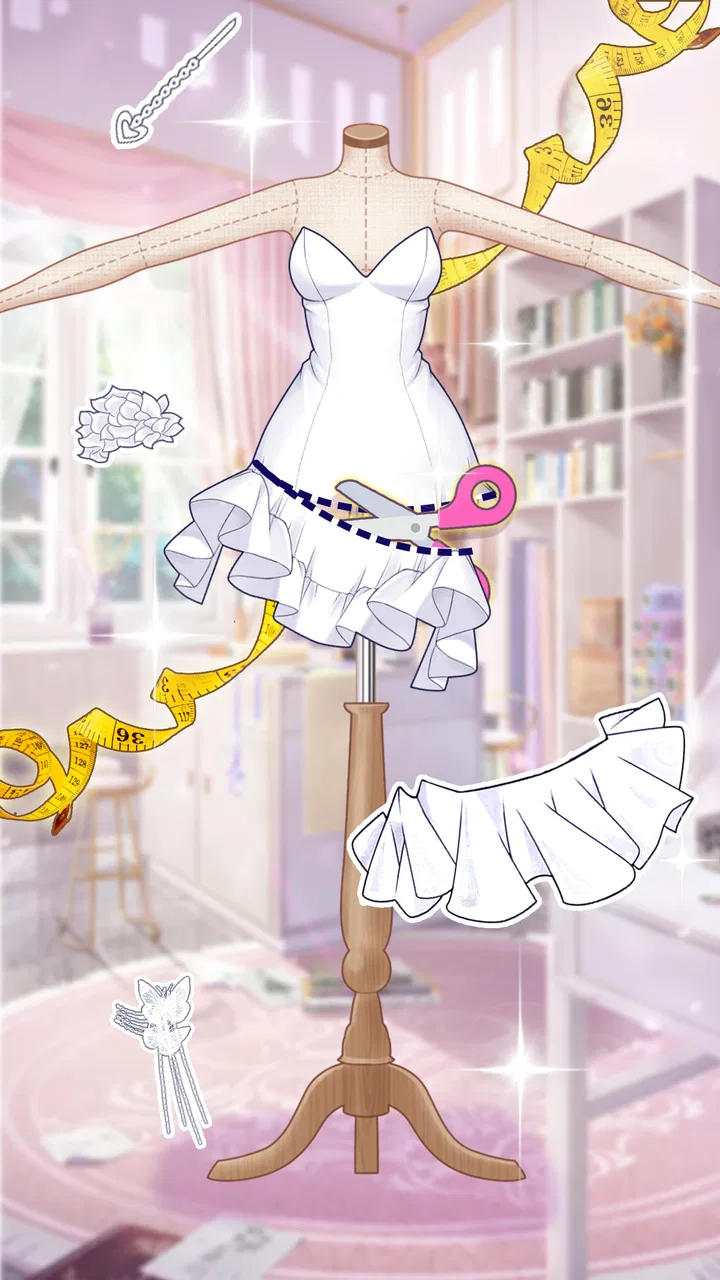
I focus on how the tailoring sequence turns separate clothing and makeup choices into a finished look, and on why settling on a style direction early makes each session feel more intentional. That gives the next section a practical starting point: what to check before playing, so a brief creative break begins smoothly rather than with unnecessary trial and error.
You May Also Like

 Blood Strike: 2.5 Anniversary
Blood Strike’s Loadouts Turn Every Drop Into a Tactical Gamble
A close look at Blood Strike’s custom loadouts: how fast access to signature weapons reshapes its battle royale rhythm, rewards preparation, and narrows the gap between fights.

 Pandora - Music & Podcasts
Pandora’s Music Is Easy to Start, but Harder to Recover
Pandora’s strength is its low-effort path from a seed to a station. Its weak spot is how much confidence it asks you to place in connection, setup, and quiet recovery.

 8 Ball Pool
 Is Built on Rivalries, Rematches, and Routine
A close look at the rivalries, rematches, shared routines, and unanswered safety questions that turn a quick pool match into a persistent mobile community.

 Samsung Music
’s Quiet Strength Is Playing What You Already Own
Its reach comes less from spectacle than from dependable access to a personal library. That simplicity is both the app’s strongest retention engine and its ceiling.

 AccuWeather: Weather Radar
AccuWeather Review: A Quick, Clear Forecast for Everyday Decisions
For everyday plans, the best forecast is the one you can understand quickly. AccuWeather makes rain timing, radar, and local conditions easy to act on, with a few trade-offs.

 Hill Climb Racing
Why Hill Climb Racing Still Turns Crashes Into One More Run
A tiny car, a bumpy hill and one more upgrade: Hill Climb Racing keeps resurfacing because its simple chaos makes every near-miss feel personal.
More From Our News Desk



The first action is choosing a direction
The most important decision happens early: I have to decide what kind of look I want to build before getting distracted by individual items. The clothing, makeup, and fashion choices invite experimentation, but starting with a general idea makes the session feel more deliberate. I might aim for something soft and coordinated, something brighter, or a look built around one standout piece.
That first choice matters because dress-up games can quickly become a pile of attractive items with no clear relationship. Here, I found it more enjoyable to pick one anchor element and work outward. If the outfit has a strong color or shape, I treat makeup and the remaining details as support rather than competing focal points. This is a useful habit for younger players too, because it turns random tapping into a simple design exercise.
The controls are aimed at convenience rather than precision. I can move through fashion and beauty choices without spending much time figuring out what each screen is for. That makes the game suitable for a quick break, and it also lowers the barrier for children who want to create something immediately. The Everyone age rating fits that accessible presentation.
What I like is that the first action produces a visible change right away. A new garment or beauty choice does not feel buried under menus or delayed by a complicated management system. The character becomes the feedback screen, so I can judge the choice in context instead of imagining how it might look later.
The feedback rhythm keeps the session moving
After each selection, the game gives me a small visual response: the character’s appearance changes, the outfit becomes more complete, and the overall style starts to take shape. That response is simple, but it is the engine of the experience. I make a choice, see its effect, decide whether it fits, and then make another choice.
This rhythm is more important than any single item. A dress-up game can have plenty of clothing and still feel flat if the interface makes experimentation slow. Fashion Tailor: Fashion Design keeps the gap between decision and result short enough that I naturally want to test another combination. The feedback is not a detailed critique like I would get from a professional styling tool, but it is immediate enough to support casual creative play.
I found a practical way to avoid wasting time: I do not try to perfect every category before checking the whole look. Instead, I make a rough outfit, review the complete character, and then return to the part that feels out of balance. This is faster than polishing accessories one by one without seeing how they work together. It also makes the game feel more like styling and less like filling every available slot.
The makeup element changes the rhythm slightly. Clothing establishes the main direction, while makeup can either reinforce that direction or deliberately create contrast. A subtle outfit can be weakened by an overly strong beauty choice, while a bold fashion combination may need a more restrained finish. That relationship gives the game a little more decision-making than a simple “tap the newest item” routine.
Still, players should understand the scale of the simulation. This is not a detailed tailoring simulator where I measure fabric, manage a workshop, or solve technical construction problems. The simulation label describes the interactive fashion-making fantasy, not a realistic garment-production workflow. If the appeal is visual transformation and quick choices, the rhythm works. If the appeal is authentic sewing technique, it will feel light.
The reward is seeing a complete look
The most reliable reward is the finished appearance. Watching a character go from an initial state to a coordinated outfit gives each small decision a purpose. I enjoy the moment when the pieces stop looking like separate selections and start reading as one style. That payoff is modest, but it arrives quickly and does not require a long commitment.
There is also a personal reward in comparing different approaches. I can make one look that is carefully matched, then try a more playful combination simply to see whether the contrast works. This is where the game is more enjoyable than a passive fashion gallery: I am responsible for the result, and the result gives me a reason to try again.
For a child, the reward can be the feeling of ownership over the character’s appearance. For an adult, it is closer to a low-pressure creative break. I would not describe the game as demanding, but that is part of its purpose. It lets me make a visible result without requiring the concentration associated with a strategy game or the patience needed for a full design program.
The free price makes that experimentation easy to try. In-app purchases are listed at $0.99 per item, so anyone considering optional purchases should treat them as small additions rather than part of the core reason to install the game. I would begin without buying anything and decide whether the available styling loop is already satisfying. That approach keeps the game’s value clear instead of allowing extra items to become the focus.
One useful way to get more from the reward screen is to judge the outfit by balance rather than by how many decorative elements it contains. I look at color repetition, the relative strength of the clothing and makeup, and whether one item has a clear role. This creates a more interesting challenge than simply selecting everything that looks attractive in isolation.
Why another session begins after the reset
The reset is central to the game’s appeal. Once I have completed a look, the desire to begin again comes from the possibility of a different result, not from a long-term simulation that continues in the background. I can change the starting idea, use a different focal item, or deliberately avoid the choices that shaped the previous outfit.
That makes each session feel self-contained. I do not need to remember a complicated campaign or maintain a large fashion business between visits. I can play for a few minutes, finish a look, and stop at a natural point. When I return, the game is ready to offer the same familiar process with a new styling decision.
The reset also exposes the game’s main trade-off. Players who enjoy collecting, decorating, and repeating short creative tasks will see the reset as an invitation. Players who need a strong story, escalating difficulty, or a meaningful long-term objective may see it as a lack of depth. The game’s replay value depends heavily on how much the player enjoys self-imposed variation.
For me, the best repeat sessions have a constraint. I might begin with one color family, build around a single garment, or try to make the makeup support rather than dominate the outfit. These rules are not presented as a formal challenge, but they give the reset a purpose. Without a small goal, repeating the same selection pattern can become routine fairly quickly.
This is also where the game differs from many usual alternatives in the simulation and dress-up space. A fashion-management game may focus on money, customers, upgrades, or a growing collection. A creative design app may offer more control but demand more time and skill. Fashion Tailor: Fashion Design sits between those extremes: it gives me more active involvement than simply browsing outfits, while staying much easier to pick up than a serious design workspace.
Everyday use: a short break with a clear finish
A realistic use case is a ten-minute break when I want something interactive but do not want to commit to a full game round. I can open it, choose a style direction, make the clothing and makeup decisions, review the result, and stop after completing the look. There is no need to prepare a strategy or wait for a lengthy match to end.
It can also work as a shared activity between an adult and a child. Instead of handing over a game with complicated rules, I can ask the child to explain why a particular outfit works and then suggest one change. That turns the styling process into a conversation about color, coordination, and personal taste without making the experience feel like a lesson.
For someone who enjoys visual creativity but is uncomfortable with drawing, the game offers a gentler entry point. The player creates through selection and combination rather than starting with a blank canvas. That is a genuine strength, although it also means the creative ceiling is lower than in an app where every detail can be drawn or edited manually.
What to know before installing
The game comes from WizSprint and is available as a free title in the simulation category. Its average rating is 4.6 from around 36 thousand ratings, and it has passed 10 million installs. Those figures suggest that the quick fashion loop has broad appeal, but they should not be mistaken for proof that it suits every type of player. Popularity cannot turn a lightweight dress-up structure into a deep tailoring system.
The release date is October 21, 2024, and the current version is 2.901. It requires Android 6.0 or later, which makes it accessible on many older Android devices. I would still pay attention to how comfortably the game runs on a particular phone, especially if the device has limited storage or struggles with visually busy interfaces, but the operating-system requirement itself is not demanding.
The game’s free entry point is useful for testing the loop before spending anything. Since individual in-app purchases are $0.99 each, I would avoid treating purchases as a shortcut to enjoyment. The better test is whether the action-feedback-reward cycle feels satisfying with the ordinary choices available. If it does, optional items can remain optional enhancements rather than a condition for having fun.
The rating for Everyone also makes it a reasonable choice for family-friendly casual play. I would still use normal parental judgement around device time and purchases, particularly when a child is playing on an account that can buy items. The age label describes the content, not how much time someone may want to spend repeating the styling loop.
Where it is stronger than familiar alternatives
Compared with a basic avatar dress-up app, this game feels more active because the fashion process has a sequence. I am not only opening a wardrobe and taking a screenshot; I am building toward a completed visual result. That extra structure gives the session a clearer beginning and end.
Compared with a full fashion-design application, it is much less intimidating. I do not need to learn technical tools, understand garment construction, or spend a long time refining one design. The trade-off is obvious: the game gives me speed and accessibility instead of professional control. Someone who wants exact silhouettes, fabric editing, or detailed pattern work should choose a dedicated creative tool instead.
Compared with a management-focused fashion simulation, it offers less strategic pressure and more direct visual play. There is no need to optimize a business decision in order to enjoy the outfit itself. That makes it better for relaxation, but less suitable for players who want progression systems, resource planning, or a sense that every decision changes a larger world.
My most useful tip is to separate experimentation from completion. On the first pass, I choose quickly and accept an imperfect result. On the second pass, I keep the strongest element and replace only the part that clashes. This two-stage workflow makes the reset feel productive and prevents me from endlessly changing every item at once.
Who should play it, and who should skip it
I would recommend it to players who enjoy dress-up, makeup, visual matching, and short simulation sessions. It is especially suitable for someone who wants a simple creative activity that can be understood immediately. It also works for younger players who like making characters look different from one session to the next.
I would be more cautious recommending it to players who expect realistic sewing, complex fashion economics, a strong narrative, or a long campaign. The game’s satisfaction comes from repeated styling, so anyone who dislikes restarting a similar process may run out of reasons to return. Likewise, players looking for competitive scoring or demanding strategic choices should probably choose another type of simulation.
Another limitation is that the game’s simplicity can make the feedback feel less meaningful after the novelty fades. The character changes in response to my choices, but the experience is primarily about my own visual judgement. If I need detailed explanations of why an outfit succeeds, I may find the game too quiet as a teacher. It encourages taste and experimentation more than it formally evaluates design skill.
My verdict on the action-feedback-reward-reset cycle
Fashion Tailor: Fashion Design succeeds because its loop is easy to feel: I choose a fashion or makeup element, see the character change, enjoy the completed look, then reset with a new idea. Each step supports the next, and the short distance between action and feedback is the reason another session can begin without much persuasion.
Its strongest quality is not depth but immediacy. I can use it as a small creative pause, a family-friendly styling activity, or a way to explore combinations without the pressure of a serious design program. The most rewarding results come when I give myself a simple styling goal instead of tapping through choices randomly.
My final judgement is positive, with a clear boundary: this is a casual fashion simulation, not a realistic tailoring workshop or a long-form management game. If that distinction matches what I want, the free download makes it easy to try, and the accessible presentation gives it a welcoming feel. If I need technical design control or substantial progression, I would look elsewhere. For quick outfit creation with makeup and a satisfying reset-and-repeat rhythm, though, it earns a place among the more approachable choices in its category.
FAQs for Fashion Tailor: Fashion Design
01What is Fashion Tailor: Fashion Design app all about?
Fashion Tailor: Fashion Design is a creative app that allows users to design and customize their own fashion pieces. Users can explore various fabrics, patterns, and styles to craft unique garments. The app is suitable for fashion enthusiasts looking to experiment with design concepts and bring their fashion ideas to life.
02Is Fashion Tailor: Fashion Design suitable for beginners in fashion design?
Yes, Fashion Tailor: Fashion Design is designed to be user-friendly and accessible for beginners. The app offers tutorials and guides to help new users understand the basics of fashion design. With its intuitive interface, even those with no prior experience can easily navigate and use the app effectively.
03What features are included in Fashion Tailor: Fashion Design?
The app includes a variety of features such as fabric selection, pattern customization, and style editing. Users can choose from a wide range of colors and textures to design garments. Additionally, the app offers a 3D model viewer to showcase designs in a realistic manner, enhancing the overall design experience.
04Are there any in-app purchases or subscriptions required?
Fashion Tailor: Fashion Design offers a freemium model, where the basic features are available for free. However, there are optional in-app purchases for premium fabrics, exclusive patterns, and advanced design tools. Users can also subscribe to a monthly plan for unlimited access to all features and regular updates.
05Can I share my designs created in Fashion Tailor: Fashion Design?
Yes, the app allows users to share their creations easily. You can export your designs and share them on social media platforms or with friends and family. This feature is perfect for those looking to showcase their creativity or get feedback from others in the fashion community.
Pros
- User-friendly interface for all skill levels.
- Wide variety of fabrics and patterns available.
- Realistic design simulation for better planning.
- Regular updates with new features and content.
- In-app tutorials for beginner guidance.
Cons
- Limited free features
- many require purchase.
- Occasional crashes on older devices.
- Large app size may impact storage space.
- Ads can be intrusive during design sessions.
- Some features require a stable internet connection.

Fashion Tailor: Fashion Design
Gallery